

Have you ever wondered if your favourite Indian meal is barely scratching the surface of what is actually on offer? While many of us find comfort in a familiar bowl of creamy curry, sticking to the same order every time often means missing out on the incredible diversity found across the subcontinent. Deciphering the differences between North Indian vs South Indian food Mildura residents enjoy can feel a bit daunting, especially if you are worried about unexpected spice levels or which side dish truly belongs with your main.
We believe a menu rich with heritage should feel like a warm invitation rather than a confusing test. It’s completely natural to feel unsure about the regional nuances that define a dish, but understanding these distinctions is the key to a more rewarding dining experience. This guide will help you identify which regional style suits your current craving, ensuring you feel confident every time you browse the menu on Langtree Avenue.
Drawing on fifteen years of local experience and the expertise of our chefs sourced directly from India, we’ll explore the “chatpatta” flavour profile that balances salt, spice, and tang. You’ll learn when to reach for a charred garlic naan and when rice is the essential partner, moving you beyond the standard Butter Chicken and into a world of authentic, vibrant flavours that celebrate the best of both North and South.
Key Takeaways
- Understand how geography shapes your plate, from the creamy, wheat-based comforts of the North to the vibrant, tropical tang of the South.
- Learn to navigate the differences between North Indian vs South Indian food Mildura residents enjoy, helping you choose the perfect flavour profile for your next meal on Langtree Avenue.
- Discover the sensory impact of traditional techniques, such as the smoky char of the tandoor oven versus the delicate art of tempering spices.
- Master the “chatpatta” flavour profile to confidently order sharing plates that offer a perfect balance of salty, spicy, and tangy notes.
- Gain the confidence to move beyond standard options and match your regional meal choice to the local Mallee weather for a truly authentic dining experience.
The Great Divide: Understanding the Culinary DNA of North and South India
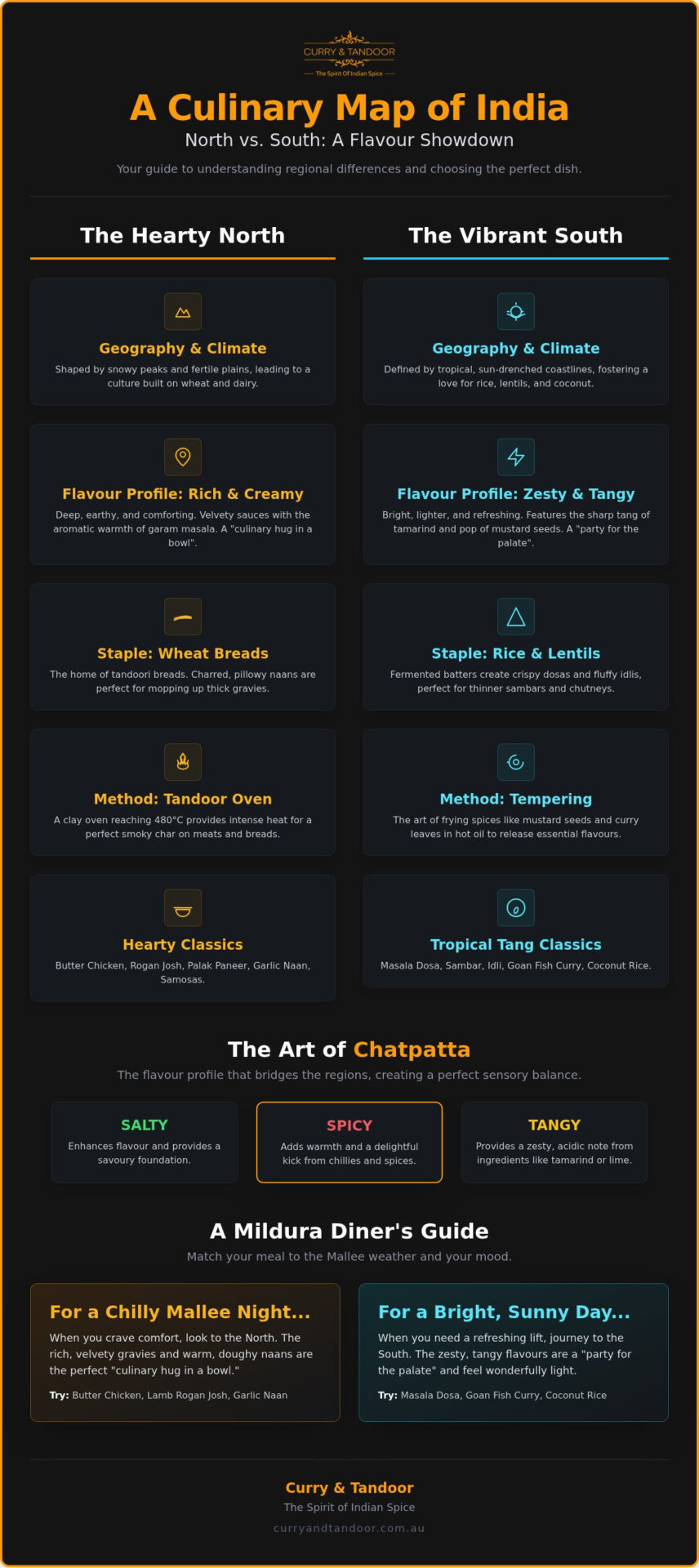
To truly appreciate the menu at Curry & Tandoor, it helps to look at the map. India isn’t a single culinary destination; it’s a collection of diverse traditions shaped by thousands of kilometres of varying terrain. The snowy peaks and fertile plains of the North created a culture built on wheat and dairy, while the tropical, sun-drenched coastlines of the South fostered a love for rice and coconut. Understanding the roots of Indian regional cuisines allows you to look past the labels and see the history in every bite. This distinction is the secret to choosing between North Indian vs South Indian food Mildura locals often find themselves debating over dinner.
In the North, the influence of Persian and Central Asian flavours remains strong, resulting in rich, velvety sauces and the aromatic warmth of garam masala. It’s a landscape where the tandoor oven reigns supreme, producing smoky meats and charred breads. Conversely, the South is a vibrant paradise defined by the sharp tang of tamarind and the earthy pop of mustard seeds. These differences aren’t just about heat; they’re about the “DNA” of the dish, determining whether your meal feels like a warm embrace or a bright, tropical escape. Recognising these patterns makes it much easier to find your new favourite curry on Langtree Avenue.
The Flavour Profiles: Richness vs Zest
The choice of cooking fat often defines the entire sensory experience. Northern recipes frequently use ghee or butter to create a luxurious, rounded mouthfeel that lingers on the tongue. These dishes are earthy and deep, perfect for when you crave something substantial and comforting. Southern cooking typically swaps the heavy dairy for coconut oil, often tempered with fresh curry leaves and dried chillies. This creates a lighter, zestier profile that feels incredibly refreshing, even when the spice levels are high. It’s the difference between a slow-simmered, creamy korma and a bright, punchy fish curry.
Staples: The Battle of Bread and Rice
Your choice of accompaniment is just as vital as the curry itself. Because the North grows vast quantities of wheat, it’s the undisputed home of the tandoor. If you are looking for authentic tandoori bread Mildura diners can’t get enough of, you are leaning into Northern tradition. These charred, pillowy naans are designed to mop up thick, gravy-based dishes. In contrast, the South relies on fermented rice and lentils to create crispy dosas or fluffy idlis. These staples are light and airy, making them the perfect partner for the thinner, more acidic sambars and chutneys that define the region. Selecting the right side ensures you get every last drop of flavour from your plate.
Signature Dishes: From Tandoori Char to Tropical Tang
Choosing between North Indian vs South Indian food Mildura locals enjoy often comes down to the mood of the evening. If you are seeking a culinary “hug in a bowl,” the North offers thick, velvety gravies that feel like a warm embrace on a chilly Mallee night. Conversely, South Indian cuisine provides a “party for the palate,” characterised by bright, zesty notes that dance across the tongue. Much of this sensory difference stems from the traditional equipment used in our kitchen. The tandoor is a traditional clay oven that reaches temperatures of up to 480 degrees Celsius to ensure a perfect, smoky char on meats and breads.
While the North relies on the intense, dry heat of the tandoor, Southern cooking is an exercise in precision through steaming and “tempering.” This difference in technique creates two distinct worlds of flavour. You can see how these dietary patterns have evolved over centuries, with the North favouring heavy dairy and the South leaning into the lightness of tropical produce. Understanding these iconic dishes helps you move beyond the familiar and discover the true breadth of Indian heritage.
North Indian Hearty Classics
The hallmark of North Indian cuisine Mildura diners have come to love is its incredible richness. Butter Chicken is perhaps the most famous example, with its silky tomato and cream base. However, the region’s true depth is found in dishes like Lamb Rogan Josh, where slow-cooked meat falls apart in a robust, aromatic gravy. For those who prefer vegetarian options, Dal Makhani offers a smoky, lentil-based comfort that is simmered for hours to achieve its signature creaminess. These dishes are designed to be shared, bringing a sense of community and abundance to the table.
South Indian Vibrant Specialities
South Indian dishes often trade cream for coconut milk and tamarind, resulting in a profile that is both sharp and fiery. If you enjoy a bit of heat, an authentic indian vindaloo Mildura style is a must-try, offering a complex tang that sets it apart from Northern curries. Seafood also takes centre stage here, often enriched with kokum or curry leaves. The secret to this vibrancy is “tempering,” a process where whole spices are flashed in hot oil at the very end of cooking to release their aromatics. This technique ensures every spoonful is packed with fresh, punchy flavour that feels light yet deeply satisfying. If you are feeling adventurous, you might like to browse our menu to see these regional stars side by side.
The Art of Chatpatta: The Bridge Between Regions
If you find yourself torn between the creamy textures of the North and the zesty punch of the South, there is a delightful middle ground that brings the best of both worlds together. In Indian culinary terms, we call this “chatpatta.” It is a vibrant, multi-layered flavour profile that defines the soul of Indian street food, combining salty, spicy, and tangy notes into a single, mouth-watering experience. While the debate over North Indian vs South Indian food Mildura locals enjoy often focuses on main curries, chatpatta Indian food Mildura acts as the ultimate bridge between regional styles.
This style of cooking is where the geographical lines start to blur in the most delicious way. Chatpatta dishes often borrow the crunch and wheat-based foundations of the North and marry them with the sharp, acidic chutneys and tempering techniques favoured in the South. Our chefs, who are sourced directly from India, understand that a truly balanced meal requires more than just a single curry. It needs the interplay of textures, such as the snap of a fresh onion salad or the cooling relief of a mint yoghurt, to create a complete sensory journey. Sharing these dishes is the best way to experience the full spectrum of Indian spices without feeling overwhelmed by a single flavour.
Sharing Plates for the Adventurous Foodie
Dining on Langtree Avenue is a wonderful way to connect with the community, and nothing encourages conversation quite like a table filled with sharing plates. These small bites are designed to pack a significant punch. Think of golden, hand-folded samosas with their spiced potato fillings, or crispy vegetable pakoras that offer a satisfying crunch in every mouthful. These aren’t just appetizers; they are carefully crafted expressions of heritage that use specific spice blends to awaken the palate.
By opting for a “banquet” style approach, you don’t have to settle for just one regional specialty. You can enjoy the smoky, clay-oven charred delights of our tandoori range alongside the tempered, spice-heavy offerings of the South. This social way of eating allows you to sample a bit of everything, making it much easier to identify which regional style suits your current craving. Whether you are a long-time local or just visiting the Mallee, these chatpatta plates provide a welcoming entry point into the diverse world of Indian cuisine.
Ordering for the Occasion: A Mildura Diners Guide
Mildura’s climate is as bold as its flavours, and seasoned locals know that the weather should always influence your order. When the winter frost settles over the Mallee, there is nothing quite like the heavy, cream-based richness of the North to provide warmth. These dishes are designed to sustain you through the cold, offering a depth of flavour that feels substantial and grounding. Conversely, as we head into those famous 40-degree summer stretches, the lighter, zestier profile of South Indian seafood curries becomes much more appealing. By understanding the nuances of North Indian vs South Indian food Mildura diners can ensure their meal perfectly complements the day’s temperature.
For those with specific dietary requirements, the South is often the natural choice. Because the region relies on rice, lentils, and coconut milk rather than wheat and dairy, many of these dishes are inherently gluten-free and vegan. This makes it much easier to host a diverse group of friends without anyone feeling like they are missing out on the authentic experience. Whether you are craving the velvety textures of a Northern korma or the tropical tang of a Southern fish curry, matching your plate to the occasion makes every bite more rewarding.
If you find yourself drawn to these tropical, coconut-driven profiles, you might also enjoy exploring the similar culinary heritage of Bangkok Milton, which specialises in a unique blend of authentic Thai and Sri Lankan dishes.
Best for Families and Kids
Introducing children to new cultures is always a joy, and Indian cuisine is particularly well-suited for interactive family dining. Most kids naturally gravitate towards the mild, nutty flavours of a traditional North Indian korma or the gentle sweetness of butter chicken. The “dip and scoop” nature of eating with fresh naan bread turns dinner into an engaging activity rather than just a meal. We take great pride in finding that perfect balance where a dish is packed with flavour but remains accessible for younger palates, ensuring everyone at the table feels included in the celebration.
The Perfect Takeaway Strategy
If you are planning a quiet night in, selecting the right dishes is key to ensuring your home feast tastes just as good as it does in our dining room. Tandoori specialties are a fantastic choice for the best Indian takeaway Mildura has to offer because the intense heat of the clay oven seals in moisture, keeping the meat succulent during transit. When reheating at home, a gentle warm-through on the stovetop for curries and a quick flash in a hot pan for breads will help maintain those authentic textures. To experience this regional diversity for yourself, we invite you to book a table or order online for your next family gathering.
Experience Authentic Regionality at Curry & Tandoor
For more than fifteen years, Curry & Tandoor has stood as a pillar of the Langtree Avenue dining scene, dedicated to sharing the true diversity of the Indian subcontinent with our local community. The nuanced debate between North Indian vs South Indian food Mildura foodies often enjoy isn’t just a matter of preference; it’s a celebration of two distinct culinary legacies that we’re proud to represent under one roof. We’ve spent over a decade and a half refining our craft, ensuring that every guest who walks through our doors feels the warmth of genuine hospitality and the pride we take in our heritage.
The secret to our consistency lies in our kitchen, where our chefs, sourced directly from India, bring a lifetime of regional expertise to every dish they prepare. They understand that the bold, spice-heavy profiles of the North require a different touch than the zesty, tempered flair of the South. By maintaining this commitment to regional accuracy, we offer more than just a meal; we provide a sensory journey that respects the origins of every ingredient. Whether you’re a regular guest or visiting us for the first time, we invite you to join us on Langtree Avenue for a truly hospitable Indian restaurant Mildura experience that feels like a personal recommendation from a trusted friend.
A Menu Built on Tradition
Our approach to cooking is grounded in tradition, blending time-honoured techniques with the freshest produce available. From the intense, dry heat of the clay tandoor to the delicate art of tempering spices in a pan, we ensure every cooking method respects the dish’s lineage. We take the time to grind our masalas fresh, capturing the volatile aromatic oils that define authentic Indian cooking. This dedication is exactly why our guests return for that signature “chatpatta” kick, which is a flavour profile that bridges the gap between regions and keeps the palate curious. It’s this balance of craftsmanship and community belonging that has made us a local favourite since we first opened our doors.
Ready to Explore? Book Your Table
We’ve made it simple for you to embark on your next culinary adventure. Our easy online booking system allows you to secure a spot for a family dinner or a romantic date night in just a few clicks. If you’re planning a cosy night at home, our online ordering and delivery options ensure your regional feast arrives fresh and full of flavour. We invite you to experience the best of both worlds in one sitting, where the creamy comforts of the North meet the tropical zest of the South. Whether you’re dining in or taking away, we look forward to sharing our passion for authentic Indian regionality with you very soon.
Embark on Your Next Culinary Journey on Langtree Avenue
Choosing between the velvety richness of the North and the vibrant, tropical tang of the South is a delightful dilemma that every local diner should experience. Whether you crave the smoky char of a traditional tandoor oven or the bright, tempered aromatics of a coastal curry, understanding the nuances of North Indian vs South Indian food Mildura allows you to order with genuine confidence. Each regional style offers its own unique reward, and the best way to find your favourite is to sample the diverse “chatpatta” sharing plates that bridge these two worlds.
At Curry & Tandoor, we have spent more than fifteen years serving as a reliable community pillar, bringing these authentic regional traditions to life. With chefs sourced directly from India, we ensure that every dish respects its heritage while providing the comfort and quality our guests have come to expect. We invite you to join us for a meal that celebrates the incredible diversity of Indian craftsmanship in a warm, hospitable setting.
Book your table at Curry & Tandoor to taste the difference tonight and discover your perfect regional match. We look forward to welcoming you soon.
Frequently Asked Questions
Is South Indian food always spicier than North Indian food?
Not necessarily, though South Indian cuisine often features a sharper, more direct heat from fresh chillies and black pepper. While Northern dishes rely on the warming glow of dried spices like garam masala, Southern recipes use heat to balance the tang of tamarind or coconut. We can always adjust the spice levels to suit your personal preference, ensuring your meal is enjoyable rather than overwhelming.
What is the most popular North Indian dish in Mildura?
Butter Chicken remains the undisputed favourite among locals who enjoy the choice between North Indian vs South Indian food Mildura has on offer. Its creamy, tomato-based gravy and mild spice profile make it an easy choice for families and those new to Indian flavours. However, Lamb Rogan Josh is a close second for those seeking a more robust, slow-cooked experience that highlights the earthy depth of Northern spices.
Do I have to order rice with every Indian curry?
No, your choice of side depends entirely on the region and the consistency of the curry you have selected. Northern dishes with thick, rich gravies are traditionally paired with tandoori breads like naan or roti, which are perfect for scooping up every drop. Southern curries, which are often thinner and more zest-driven, are better suited to steamed rice that absorbs the vibrant, punchy liquids beautifully.
Are there many vegetarian options in South Indian cuisine?
Yes, South Indian cuisine is naturally abundant in vegetarian and vegan options due to its heavy reliance on lentils, rice, and fresh vegetables. Many traditional dishes avoid dairy and wheat entirely, using coconut milk for creaminess and fermented batters for texture. This makes it an excellent choice for diners with specific dietary needs who still want to experience the full, authentic spectrum of Indian regional flavours.
The efficiency of farming these staples in regions like Kerala is often supported by local industrial innovation; you can learn more about Redlands Motors to see how their agricultural machinery plays a role in the regional food production chain.
What does “Chatpatta” actually mean on an Indian menu?
Chatpatta describes a specific flavour profile that is simultaneously salty, spicy, and tangy, often associated with the vibrant street food of India. It is the kind of taste that makes your mouth water and keeps you coming back for another bite. On our menu, these are often sharing dishes that use ingredients like amchoor or lemon to create a bright, punchy contrast to our heavier main curries.
Can I get authentic South Indian dosas in Mildura?
We take great pride in serving authentic South Indian cuisine that captures the traditional flavours and techniques of the region. Our chefs, sourced directly from India, use time-honoured methods to prepare our regional specialities, ensuring they meet the high standards of our local community. You can always browse our current menu online to see our latest offerings and find the perfect regional dish for your current craving.
What is the best Indian dish for someone who does not like heat?
A traditional North Indian Korma is the perfect choice for those who prefer a mild, flavourful experience without the heat of chillies. This dish uses a base of ground cashews, yoghurt, and cream, flavoured with delicate aromatics like cardamom and cinnamon rather than hot spices. It provides a luxurious, nutty profile that is deeply satisfying and very approachable for children or those exploring Indian food for the first time.
Why do North Indian curries use so much cream and butter?
The use of dairy in Northern recipes is a reflection of the region’s geography, where fertile plains supported a significant dairy industry. Ingredients like ghee, cream, and butter aren’t just for luxury; they act as a vehicle for fat-soluble spices, mellowing their intensity and creating that signature velvety texture. This heritage-driven approach results in the comforting, hearty sensation that North Indian cuisine is famous for around the world.