

Have you ever wondered why that first bite of a warm, blistered naan feels so much more like a heartfelt welcome than a simple side dish? It’s the unmistakable magic of the clay oven, where the intense heat of the coals meets the patient hands of the baker to create a tradition you can taste. If you’ve been searching for authentic tandoori bread Mildura offers, you likely know the disappointment of settling for pre-packaged versions that lack the soul and smoky aroma of the real thing.
We agree that a great Indian meal is only as good as the bread used to scoop up every last drop of rich sauce. You deserve a dining experience that respects heritage and celebrates the craftsmanship of the tandoor. In this guide, we promise to share the ancient secrets of this high-heat baking method and explain why it remains the beating heart of our kitchen. We’ll help you distinguish between a classic roti and a buttery naan, while providing expert tips on pairing these handcrafted breads with your favourite curries to create a perfectly balanced feast for the senses.
Key Takeaways
- Discover how the intense 400-degree heat of a traditional clay oven creates the signature smoky aroma and perfect texture of authentic flatbreads.
- Identify the essential differences between leavened naan and wholesome wholemeal roti to find your ideal tandoori bread Mildura match.
- Learn the professional secrets to pairing sturdy, hand-stretched breads with rich, creamy curries for a truly balanced Indian feast.
- Understand why the unique combination of convection and radiant heat in a tandoor produces results that a standard kitchen oven simply cannot match.
- Explore the importance of heritage-led baking techniques that have been preserved for generations to ensure a genuine and hospitable dining experience.
What is Tandoori Bread and the Magic of the Tandoor?
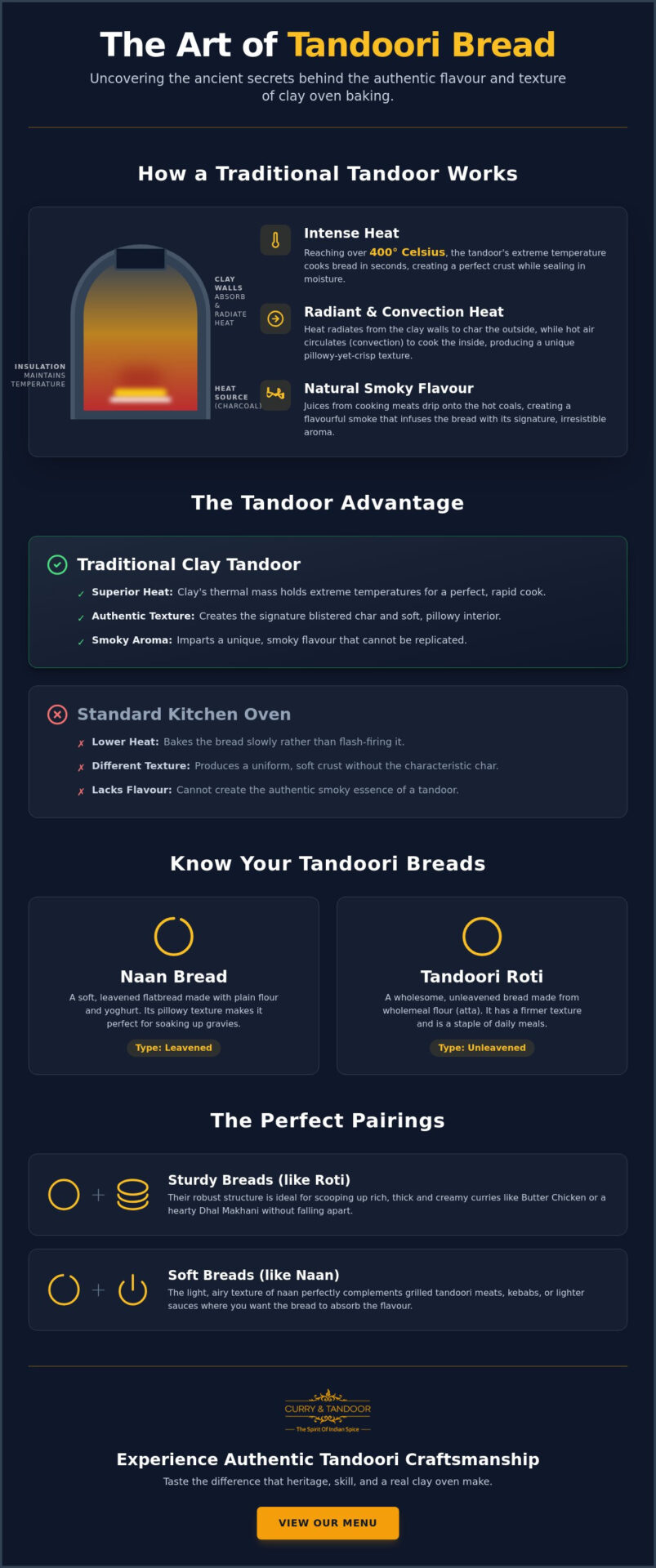
Imagine the glowing embers at the base of a deep clay vessel, radiating a heat so intense it transforms simple dough in mere seconds. This is the essence of tandoori bread Mildura diners have come to love. Unlike bread baked in a standard convection oven, tandoori varieties are slapped directly onto the scorching internal walls of a tandoor. This cylindrical clay oven creates a unique environment where radiant heat and convection work together to produce a texture that is pillowy on the inside yet beautifully charred on the outside. Every piece carries a distinct smoky aroma, a result of the high-temperature environment that seals in moisture while crisping the edges to perfection.
To truly understand the craft, one must look at What is a Tandoor Oven? and how its design has remained virtually unchanged for centuries. The magic lies in the way the clay walls retain heat, reaching temperatures upwards of 400 degrees Celsius. This intense heat source is what separates a genuine experience from a pre-packaged imitation. While a home oven might bake bread, only a tandoor can fire it, creating that signature bubble and char that defines authentic Indian flatbreads.
The Cultural Significance of Bread in Indian Dining
In Indian culture, bread is far more than a side dish; it’s an essential utensil designed for the communal table. Whether you’re enjoying North Indian specialties or exploring South Indian flavours, the act of tearing a piece of warm bread to scoop up dhal or curry is a gesture of connection. It’s a hospitable tradition that encourages sharing and conversation, bridging the gap between different regional culinary influences. When you sit down for a meal, the bread serves as the perfect vessel for the rich, complex spices that define our heritage. It brings people together, turning a simple dinner into a shared celebration of craftsmanship.
Why Mildura Locals are Swapping Sourdough for Naan
The Sunraysia region has always had a rich agricultural history, but lately, there’s been a shift towards more adventurous eating. While we still appreciate a good sourdough, many locals are discovering the rewards of authentic tandoori bread Mildura restaurants serve with pride. These flatbreads, particularly when made with wholemeal atta flour like roti, offer a wholesome alternative to highly processed white loaves. There’s also a wonderful social element to it. Gathering at a local favourite on Langtree Avenue to watch chefs hand-stretch dough before it’s fired creates a sense of community that feels right at home in our regional centre.
The Secret Behind the Texture: How a Clay Tandoor Works
The tandoor is a marvel of ancient engineering. It is a cylindrical clay vessel that serves as the beating heart of our kitchen. Its design features a thick clay lining encased in heavy layers of insulation, often made of sand or rock wool, which helps maintain incredible internal temperatures. Whether the heat source is traditional charcoal or modern gas, the result is a fiery environment that reaches upwards of 400 degrees Celsius. This intense heat is essential for creating the unique profile of authentic tandoori bread Mildura diners expect, as it forces the dough to rise and crisp almost instantly.
To bake each piece, our chefs must perform a precise, rhythmic dance. They reach into the scorching chamber to slap the raw dough directly onto the internal clay walls. The dough sticks immediately, held in place by the surface tension and the immediate sear of the heat. It is here that the science of convection and radiant heat takes over. While the hot air circulating inside the oven cooks the bread evenly, the radiant heat from the clay walls creates those beautiful, dark charred spots that add depth to every bite.
As our tandoori specialties cook on skewers in the centre of the oven, juices often drip onto the heat source below. These droplets vaporise instantly, sending a fragrant, seasoned smoke back up through the chamber. This natural process seasons the bread as it bakes, imparting a smoky scent that defines the genuine tandoor experience. The same intense heat and fragrant smoke that perfects our bread is also what makes tandoori chicken Mildura diners love so deeply flavourful and tender. If you would like to taste the difference that this traditional method makes, we invite you to view our menu and discover the rewards of true clay-oven craftsmanship.
Thermal Mass and the Clay Oven Advantage
Clay possesses a superior thermal mass that modern stainless steel ovens simply cannot replicate. It absorbs a vast amount of heat and releases it with a gentle, steady consistency. This unique property provides the moisture retention secret that keeps the bread soft and pillowy on the inside while the exterior develops a delicate crunch. The tandoor represents a 5000-year-old technology that remains the most effective method for high-heat baking in the modern world.
The Skill of the Tandoori Chef
Working with a high-heat clay oven is a physically demanding craft that requires years of dedication. Timing is everything in this environment; a few seconds too long and the bread becomes brittle, while a moment too short prevents the perfect rise. Our chefs, sourced directly from India, bring decades of tandoor mastery to Mildura, ensuring that every piece of bread is pulled at its peak. They possess the intuitive touch needed to prevent the dough from falling into the embers, preserving a heritage of quality that we are proud to share with our local community.
Popular Varieties of Tandoori Bread in Mildura
The variety of tandoori bread Mildura residents can enjoy is a testament to the incredible versatility of the clay oven. While the tandoor provides the heat and smoke, the specific ingredients and techniques used to prepare the dough determine the final character of the bread. From the soft, pillowy stretch of a classic naan to the earthy, wholesome bite of a traditional roti, there is a style to suit every palate and every dish on the table. Each piece is a unique expression of craft, shaped by hand and fired to order.
Beyond these staples, the tandoor also produces more intricate creations that add depth to your dining experience. Kulcha is a stuffed delight that often features savoury fillings like spiced potato, onion, or paneer, making it a hearty addition to any meal. For those who enjoy a richer texture, the paratha is a layered masterpiece. It is folded and brushed with butter or ghee before being fired, resulting in a flaky, decadent finish that pairs beautifully with lighter vegetable dishes or a simple dhal.
Naan vs. Roti: Which One Should You Order?
Choosing between these two pillars of Indian dining often comes down to texture and dietary preference. Naan is made with leavened maida, a fine wheat flour, which gives it its world-famous fluffy and stretchy quality. Roti is an unleavened alternative crafted from wholemeal atta flour. It is thinner and carries a more robust, earthy flavour. If you’re looking for something lighter, roti is a wonderful choice. However, the garlic naan remains a true phenomenon in Mildura takeaway orders. Its fragrant, buttered surface is almost impossible to resist when paired with a steaming bowl of lamb rogan josh.
Elevating the Basics with Flavours and Fillings
We believe that bread should be just as exciting as the main course. Cheese naan has become the ultimate comfort food for a cosy night in the Sunraysia region, offering a gooey, melted centre that delights guests of all ages. For a more complex experience, the Peshawari naan provides a beautiful sweet-and-savoury blend of nuts and raisins, reflecting the influences of the North-West Frontier. These regional variations, including Kashmiri styles that often incorporate unique dried fruits, show how a simple dough can be transformed into a celebration of culture. Each variety ensures that the tandoori bread Mildura locals receive is always fresh, warm, and full of soul.
The Perfect Pair: Matching Bread with Authentic Curries
Choosing the right accompaniment is more than just a matter of taste; it’s about finding the perfect balance between texture, spice, and sauce. When you sit down to enjoy authentic tandoori bread Mildura locals know that the bread is the silent hero of the plate. It acts as both a sponge for rich gravies and a cooling agent for bold heat. Generally, heavy or creamy curries require a sturdy, leavened partner like Naan. The bubbles and thickness of the dough provide enough structure to hold up against decadent sauces without becoming soggy.
If you’ve opted for a dish with a bit of a kick, buttered breads are your best friend. The fats in the butter or ghee help to coat the palate, gently tempering the intensity of the chillies so you can appreciate the underlying spice profile. In contrast, Tandoori Roti is the ideal companion for dry bhuna dishes or lentil-based dhals. Its thin, earthy nature doesn’t overwhelm the more subtle, concentrated flavours of these preparations. This thoughtful approach to pairing is a hallmark of North Indian cuisine in Mildura, where every element of the meal is designed to harmonise with the next.
Pairing Guide for Curry & Tandoor Favourites
For the iconic Butter Chicken, a Garlic Naan is almost mandatory. Its fragrant, charred surface is the essential ‘mop’ needed to capture every drop of that creamy tomato sauce. When serving a robust Lamb Rogan Josh, we often recommend a simple Tandoori Roti. The thin, wholemeal bread allows the complex richness of the slow-cooked gravy to remain the star. If you’re exploring our vegetarian tandoori Mildura specialties, try matching a Paneer Butter Masala with a stuffed Kulcha. The soft, spiced potato or onion filling inside the bread adds an extra layer of comfort to the meal.
The Art of the Indian Banquet
Organising a bread basket for a group is about creating a journey of textures. We suggest a mix of plain, buttered, and stuffed varieties to keep the palate engaged. Timing is vital here. Bread should always arrive at your table piping hot, straight from the clay oven, while the steam is still trapped within the layers. When it comes to etiquette, remember that bread is traditionally torn with the right hand. It’s a gracious, tactile way to eat that connects you directly to the food. If you’re ready to experience these pairings for yourself, you can book a table online and let us guide you through a genuine Sunraysia feast.
Experience Authentic Tandoori at Curry & Tandoor Mildura
For 15 years, our family has had the privilege of serving the Sunraysia community from our hospitality centre on Langtree Avenue. We have seen Mildura grow and evolve over the years, but our commitment to the ancient art of the clay oven has remained a constant, reliable pillar of our kitchen. When you seek authentic tandoori bread Mildura locals can rely on, you are looking for more than just a side dish; you are looking for a legacy of consistent quality. Every piece of dough we fire is a tribute to the traditions we brought with us, ensuring that the smoky char and pillowy texture remain as genuine as they were on our very first day of service.
Our secret lies in the skilled hands that shape the dough every evening. We take immense pride in our chefs, who were sourced directly from India to ensure that our tandoor techniques remain untainted by modern shortcuts or electric imitations. They understand the rhythm of the heat and the subtle cues of the clay walls, knowing exactly when the bread has reached its peak. By combining their generational mastery with premium Australian flour, we create a product that respects both its cultural heritage and its local home. It is this dedicated blend of regional quality and traditional skill that makes our tandoori specialties a standout feature of the local dining landscape. Diners who are curious about how this same transformative heat elevates plant-based dishes will find our guide to authentic vegetarian tandoori in Mildura an illuminating read.
The Atmosphere of Langtree Avenue Dining
The atmosphere at our restaurant is built on a spirit of genuine, grounded hospitality. As you walk through our doors, the evocative scent of the tandoor greets you, immediately setting the stage for a celebratory and sensory meal. Our open kitchen allows you to witness the craftsmanship of the fire firsthand, creating a unique dining energy where the glow of the coals and the dusting of flour come together. Whether you are celebrating a significant milestone with a large group or simply enjoying a quiet night out, our family-style environment is designed to make you feel like a valued guest in our home.
How to Order Your Tandoori Feast Today
Bringing the tandoor experience to your own family table is a straightforward and rewarding process. We offer simple online ordering and delivery for those nights when you crave a high-quality Mildura takeaway but prefer the comfort of your own home. However, for the full sensory reward of bread that arrives at your plate still steaming and fragrant, we always recommend a dine-in visit. We invite you to Book your table at Curry & Tandoor to experience the tandoor for yourself and discover why the heart of every great Indian meal begins with the ancient fire of the oven.
Savour the Tradition of the Tandoor Tonight
Understanding the intricate science of the clay oven and the art of pairing specific textures with rich gravies transforms a simple meal into a genuine culinary journey. We hope this guide has helped you appreciate why authentic tandoori bread Mildura offers is so much more than a standard side dish. From the 400-degree heat of the clay walls to the intuitive touch of our chefs, every element of our process is designed to honour a heritage that we have proudly shared with the Sunraysia community for over 15 years. By choosing breads fired by experts sourced directly from India, you are participating in a tradition that values quality, consistency, and the warmth of a shared table.
Whether you’re planning a quiet evening at home or a lively family gathering, we invite you to experience these smoky flavours for yourself. You can Order your fresh Tandoori Bread and Curry for takeaway tonight and enjoy the rewards of true tandoor craftsmanship. We look forward to sharing our passion for authentic Indian cuisine with you soon.
Frequently Asked Questions
What is the difference between Naan and Tandoori Roti?
Naan is a leavened bread made with fine wheat flour, whereas Tandoori Roti is an unleavened alternative crafted from wholemeal atta. This difference in ingredients means that naan has a soft, stretchy, and pillowy texture. Roti is thinner and offers a more robust, earthy flavour profile. Both are essential staples, but your choice depends on whether you prefer a fluffy bread or a more wholesome, rustic bite.
Is tandoori bread vegan-friendly?
Many traditional tandoori breads can be prepared to suit a vegan diet, particularly the Tandoori Roti. While naan often contains yogurt or milk to help it rise, roti is typically made from just wholemeal flour and water. It’s important to request that your bread isn’t brushed with butter or ghee before serving. We’re always happy to accommodate these preferences to ensure everyone feels welcome at our table.
Why is tandoori bread cooked on the walls of the oven?
Chefs slap the dough onto the internal clay walls to take advantage of intense radiant heat and direct contact. This unique positioning allows the bread to bake rapidly at temperatures exceeding 400 degrees Celsius, which creates the signature bubbles and charred spots. The surface tension of the dough keeps it stuck firmly to the clay until it’s perfectly cooked and ready to be skewed out by our experts.
Can I get gluten-free tandoori bread in Mildura?
Traditional varieties of tandoori bread Mildura diners enjoy are made from wheat-based flours and naturally contain gluten. Because our tandoor is used exclusively for these heritage wheat doughs, we don’t offer a gluten-free bread fired in the same oven due to cross-contact. However, we provide a wide range of gluten-free rice dishes and curries that ensure a satisfying and safe dining experience for all our guests.
How do I keep tandoori bread fresh if I order takeaway?
The best way to maintain freshness is to keep the bread wrapped in its original packaging until the moment you serve your meal. If the tandoori bread Mildura families take home has cooled during transit, you don’t need a microwave, which can make it chewy. Instead, place it in a hot, dry frying pan for thirty seconds on each side. This simple step revives the crispness of the edges while keeping the centre soft.
What makes the tandoor different from a pizza oven?
A tandoor is a vertical clay cylinder designed to trap heat and smoke, whereas a pizza oven is typically a horizontal dome. The tandoor’s unique shape creates a chimney effect that circulates air at much higher temperatures. This allows for a combination of baking, roasting, and smoking all at once. It’s this specific environment that imparts the deep, smoky aroma that a standard pizza oven simply cannot replicate.
Why is my tandoori bread charred on one side?
Charring on one side is a sign of a perfectly fired bread that has been cooked directly against the clay wall. That side receives intense contact heat, creating the crisp, dark ‘leopard spots’ that carry the most flavour. The other side is exposed to the hot air within the chamber, which cooks the dough gently to keep it light and airy. This contrast is the hallmark of genuine craftsmanship.
What is the best bread to order for someone who doesn’t like spicy food?
Plain or Butter Naan are the ideal options for anyone who prefers to avoid spicy flavours. These breads are focused on the natural sweetness of the wheat and the richness of the butter, providing a soothing accompaniment to your meal. They are designed to balance the bold spices of our curries rather than adding any heat of their own, making them a safe and delicious choice for every guest.